Practical · Bike · Travel
Getting your bike to Vietnam: what each airline actually charges
The bike is the last question before you book, and the answer depends on the airline more than on the bike. What each carrier charges, read on its own page and dated.

By Valerian · Founder & Performance Coach
· 7 min read
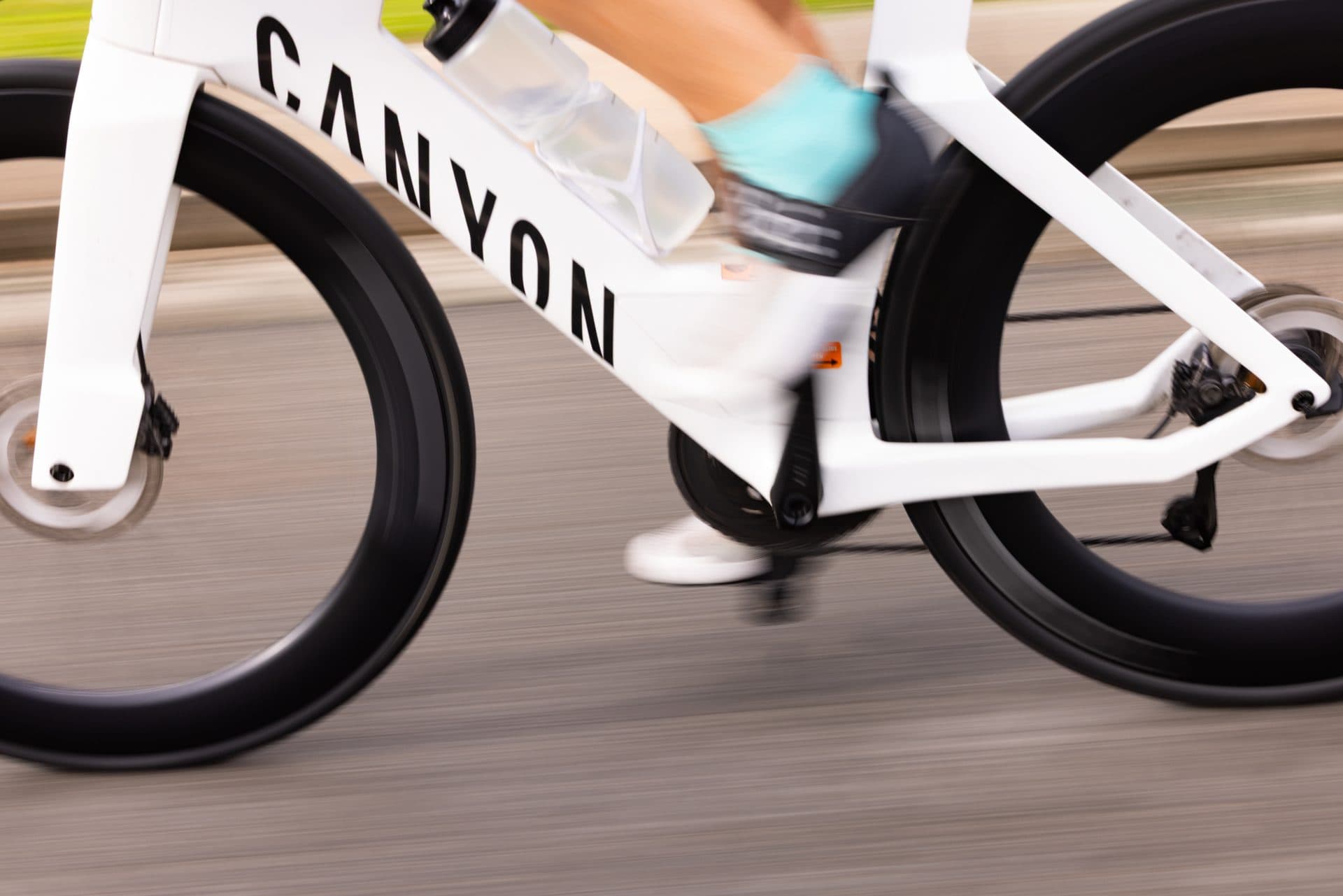
The last question we get before someone books is almost never about the training. It is "and the bike?", and behind it is a number the person has usually heard second-hand: the bike costs as much as a second ticket. Sometimes it does. Sometimes it flies for nothing. The difference is not the bike, it is the airline, and nobody publishes the comparison because nobody has an interest in doing so. We do, so here it is.
Everything below was read on each airline's own baggage page, on the date given in the table. Fees change, and an airline's page is the only figure that holds on the day you fly. Treat this as the map, and check the one line that concerns you before you pay for the ticket, not at the check-in desk.
Three ways an airline counts a bike
Every carrier we read does one of three things with a packed bicycle.
- It is one of your checked bags. The bike box counts as a piece of your allowance, like a suitcase, provided it stays under a size and a weight. If your fare includes two pieces, the bike is the second one and costs nothing.
- It is a checked bag, plus an oversize fee. The bike counts against your allowance, and because a bike box is bigger than a suitcase it also pays a fixed "bulky item" charge, per flight.
- It is extra allowance you buy. The airline sells sports-equipment allowance in weight bands, online, and the bike travels inside it.
The trap is the size threshold. A road bike in a standard soft bag measures around 250 cm when you add length, width and height, and a hard case is more. An airline whose "normal bag" limit is 203 cm will treat almost every bike as oversize. An airline whose limit is 292 cm or 300 cm will treat almost every bike as a bag. That single number decides whether you pay or not.
What each airline charges, as of autumn 2026
Fees are per flight, so double them for a return trip. "Allowance" means the checked baggage your fare includes. All figures are the airline's, in the currency the airline publishes them in.
| Airline | How the bike is counted | Size limit before it is oversize | What you pay on a Europe to Vietnam flight | Booking rule | Read on |
|---|---|---|---|---|---|
| Vietnam Airlines | A piece of your allowance, plus a bulky-item charge once it is over 23 kg or over 203 cm | 203 cm (length + width + height) | Up to 23 kg and 203 cm: nothing beyond your allowance. Over that, up to 330 cm: USD 300 per flight to or from Europe, USD 320 to or from Australia. No piece over 32 kg is accepted on Europe or Australia flights | Contact a branch at least 24 hours before departure | vietnamairlines.com, 29 September 2026 |
| THAI | A piece of your allowance, one bike per passenger | 292 cm; accepted up to 330 cm | Under 292 cm and within your weight allowance: nothing. Between 292 and 330 cm, or between 23 and 32 kg: USD 80 per flight (flat rate, Europe to Asia, THAI-operated flights) | Advise the airline in advance; handlebars turned, pedals off, tyres deflated, boxed or bagged | thaiairways.com, 29 September 2026 |
| Qatar Airways | Part of your checked allowance if it fits its weight and dimensions; otherwise you buy sporting-equipment allowance | The checked-baggage dimensions of your route | Within your allowance: nothing. Extra sporting-equipment allowance, bought online up to six hours before departure: USD 150 up to 10 kg, USD 200 for 10 to 20 kg, USD 250 for 20 to 30 kg | Motorised or battery-assisted bikes are refused; cardboard box or bike case, tyres deflated, pedals off | qatarairways.com, page as archived on 29 March 2026 |
Three carriers, three answers. On Vietnam Airlines, the carrier with the non-stop flights between Paris or Frankfurt and Saigon, a bike in a normal bag is over the 203 cm limit and pays the bulky-item charge each way: that is the number people have heard, and it is real. On THAI, through Bangkok, the same bike in the same bag is under 292 cm and flies as one of your checked pieces. On Qatar, through Doha, it flies inside your weight allowance if you pack light, and the extra allowance is sold by the kilo if you do not.
We wanted to give you eight airlines in this table, not three: Emirates, Turkish, Singapore, Cathay Pacific and Air France-KLM all fly this route with one stop. Their baggage pages refused our connection while we were writing, and we do not print a fee we have not read on the airline's own page. Look for "sports equipment" or "bicycle" on the baggage page of the carrier you are considering, and read the three things the table above reads: whether the bike counts as a bag, the size limit, and the fee per flight.
What that means when you choose the ticket
- Compare fares with the bike in. A one-stop ticket that costs a little more than the non-stop can be cheaper by several hundred euros once the bike is counted. The bike fee is the biggest hidden difference between two otherwise similar tickets on this route.
- Measure your bag before you believe a limit. Length plus width plus height, packed. If you are near a threshold, a soft bag with the wheels in separate wheel bags, or a smaller frame position, can bring you under it.
- Keep the whole trip on one ticket. On a single ticket the bike is checked through to your final airport, including the domestic leg to Quy Nhon or Da Lat. On two separate tickets you collect it, check it in again and pay the second airline's own fee, and domestic low-cost fares include little or no checked baggage.
- Declare it when you book, not at the airport. Vietnam Airlines wants 24 hours' notice through a branch; the others want the bike in your booking in advance. An undeclared bike can be refused at the desk on a full flight.
- Pack it the way the airline says. All three carriers ask for the same thing: handlebars turned along the frame, pedals removed, tyres deflated, everything in a box or a bag. Take the rear derailleur off its hanger and tape it inside the frame, and put a spacer between the dropouts. Photograph the bike and the box before you hand it over.
The practical page on bringing your bike covers the rest: the car we book to meet you at the airport, the first day, and what to do if the box arrives damaged.
Renting instead
The honest state of bike rental in Vietnam, as of autumn 2026: there is no fleet of carbon road bikes for hire in Da Nang, Nha Trang, Phan Thiet or Phu Quoc that we would put a guest on for a week of long rides. The rental market that exists is built for touring. Mr Biker Saigon, the largest rental operation we could find, rents aluminium and carbon gravel bikes from its garage in Ho Chi Minh City by the day or the week, with one-way drop-off in Nha Trang, Da Nang or Hoi An for a fee, and no road bike on the list.
So we handle it ourselves. If you would rather not fly your bike, we arrange a road bike for the week as an extra: write to us with your height, your usual frame size and your pedal system when you book, and we tell you what we can put under you and what it costs. It will not be your position, and a week of long rides is a week you want on your own position, which is why most athletes bring their own. But the option exists, and for a first camp, or for anyone who has just read the Vietnam Airlines line above, it is a real one.
The short version
If you fly Vietnam Airlines, budget the bulky-item charge each way and declare the bike 24 hours ahead. If you fly THAI or Qatar, a packed bike within your allowance costs nothing extra, and the fee if you go over is a fraction of the non-stop's. Read the one line that concerns you on the airline's own page, on the day you book, and let the bike choose the ticket rather than the other way round.
Where this is trained
The camps this article comes from
These are the weeks on the 2027 calendar where what is described above is actually trained. Each page has the week, the base and how to get there.
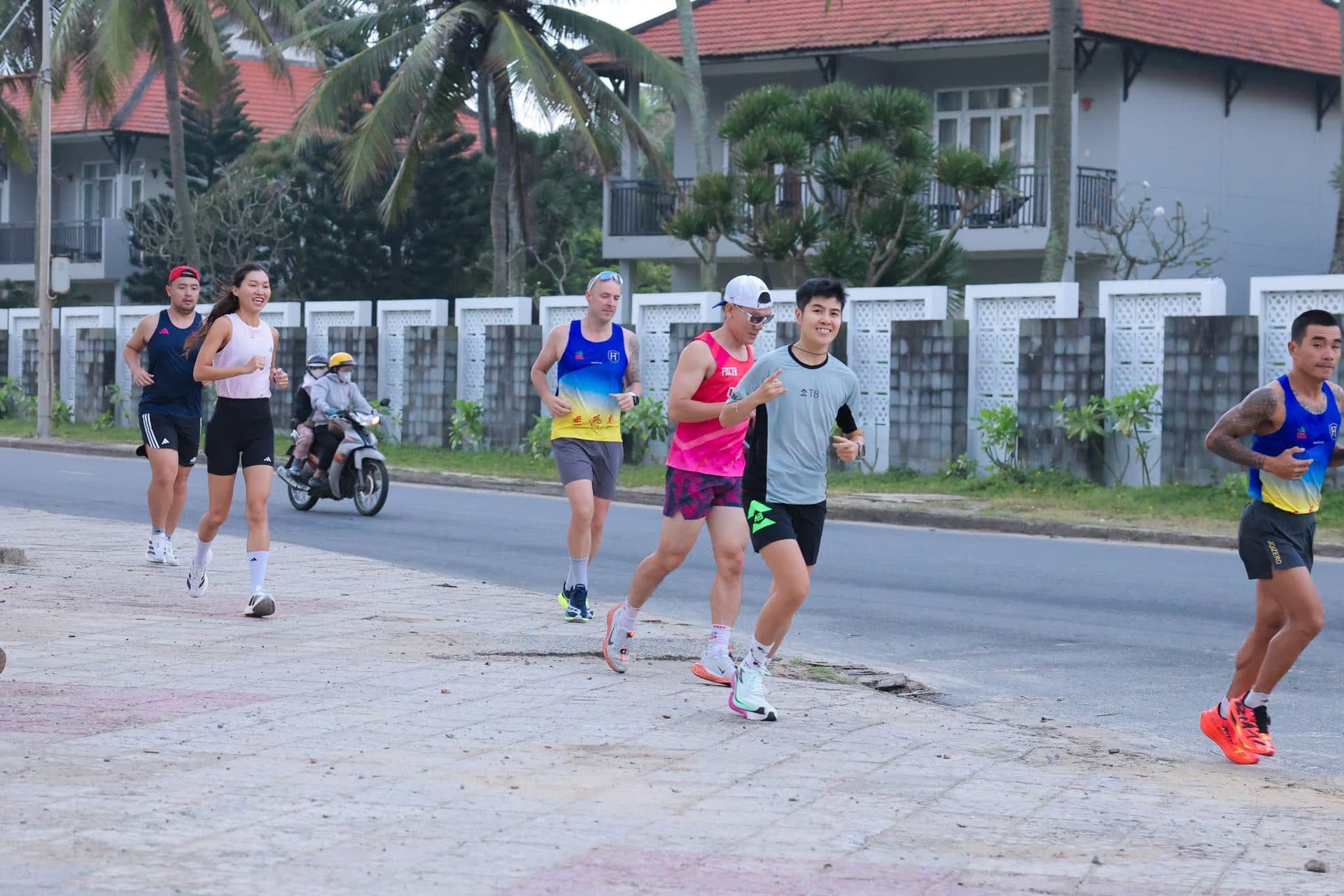
Central Coast · Da Nang · February 2027
19 – 26 February 2027Da Nang / Hoi An
Island Volume · Phu Quoc · March 2027
19 – 26 March 2027Phu Quoc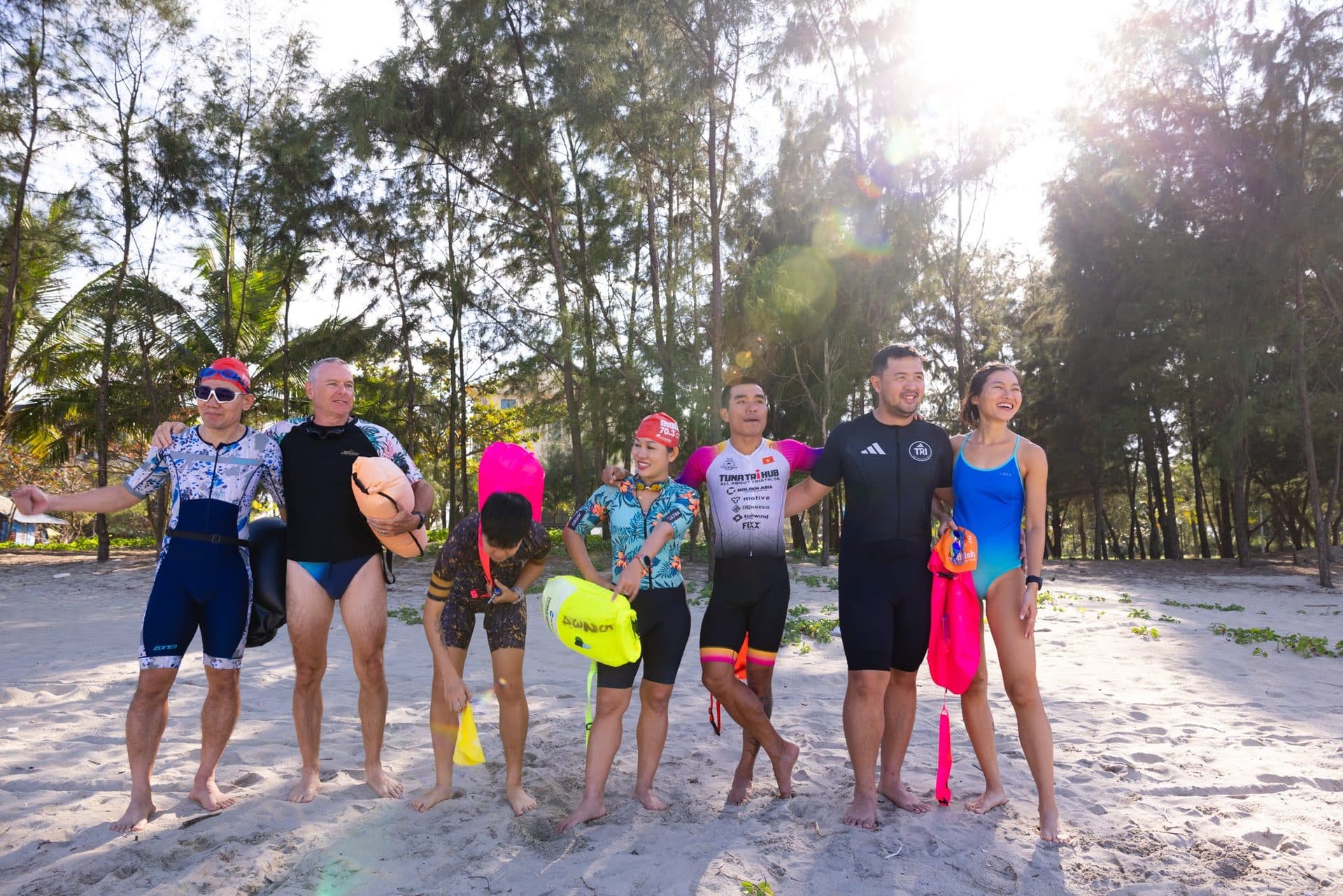
Sea Swim · Phan Thiet · April 2027
2 – 9 April 2027Phan Thiet / Mui Ne
Bay & Pass · Nha Trang · May 2027
14 – 21 May 2027Nha Trang / Cam Ranh
House of Triathlon camp · Hội An 2026