Vietnam · Seasons · Planning
One country, three climates: how the 2027 calendar was built
Vietnam runs from a northern autumn to a tropical July on the same coast. Why each 2027 camp sits in the month it does, and how to pick the week that fits your season.

By Valerian · Founder & Performance Coach
· 6 min read

The most common question we get about training in Vietnam is some version of "is it not too hot?". The honest answer is: it depends where you are and when, and the difference is not a few degrees. It is the difference between a sea at 23°C in February and 34°C with full humidity in July, on the same coast, on the same roads.
Vietnam is long and thin, and it does not have one climate. It has three that matter to a training week, and the 2027 calendar is nine camps placed on those three so that each one gets the month it is best in. Here is the logic, month by month.
Three climates, not one
The north has a real autumn and a real winter. Humidity drops in October, mornings get cool, and by December the highlands can be genuinely cold. It is the only part of the country where "autumn" means what a European means by it.
The central coast, from Da Nang down to Nha Trang, has its rainy season late in the year, roughly October to December, and a long dry stretch from around February to August. That dry stretch begins mild and ends very hot. February and July on this coast are the two faces of the same place.
The south, which includes Phu Quoc and the Mui Ne coast, follows the monsoon split: dry from about November to April, wet from May to October. The dry season is the training season there, and the calendar treats it that way.
Above all of this sits Da Lat, in the Central Highlands, at moderate altitude and cool all year, with afternoon rain in the wet months. It does not behave like the coast at all.
February: the cool coast
The season opens in Da Nang, because February is the one window on this coast where all three disciplines can be trained at full value on the same day. The air is dry and around 24°C on the road, the sea is 23.5°C and swimmable, and the Hai Van road is a climb rather than a heat exposure. This is the week for an athlete coming out of a northern winter who wants volume and warm water, not three days spent learning to cope with heat. It also closes 72 days before the IRONMAN 70.3 on the same coast.
March: the island, in the dry season
Phu Quoc in March is the heart of the southern dry season: calm sea, clear skies, low-traffic roads. The week is aerobic volume and open water, with the afternoons deliberately given back, and it sits on the Easter week so that a European employee can be away for nine days on four days of leave. Train hard, recover on an island.
April: sea swimming, before the wind
Phan Thiet is chosen for one thing most camps quietly replace with a pool: real open-water swimming in the sea. The Mui Ne coast is famous for its afternoon wind, so swims are scheduled in the calm morning window, and the rest of the day goes to the open coastal roads and the dunes. Still the dry season in the south, and still before the heat of the coast further north has built.
May: the most dependable week of the year
If you want to build a season on a week rather than gamble one on it, it is Nha Trang in May. The island-sheltered bay is calm, the sky is dry, and the conditions hold from one day to the next with a consistency no other destination on the calendar matches. Turn inland and the road towards Da Lat climbs for more than 30 km, the longest sustained climb of the year. It lands just before the June cluster of races in the region.
June: the quiet coast
Quy Nhon is the coastal city between Da Nang and Nha Trang that the tour buses have not found. Rolling roads along the sea, coves for sheltered open-water sets, a working fishing port instead of a resort strip. June is within the dry window here, warm but not yet at the July peak, and the riding profile is exactly what a volume week wants.
July and August: the heat, on purpose
Then the calendar turns towards the heat deliberately. Da Nang in July is around 34°C with full humidity and a sea wind that does not cool. That is the product, not the setting: the week is built around heat tolerance, with session times placed where the heat is useful, and an evening every day spent on hydration, sodium and cooling. Advanced only.
Nha Trang in August is the endurance version of the same idea. Long days, long coastal roads, and the bay still sheltered enough to swim in every morning whatever the open sea is doing. It closes seven weeks before an October race, which is exactly why it is there. If you are racing in Kona, the article on heat acclimatisation explains how these two weeks fit into the last three months of a build.
September: cool air, big climbs, afternoons off
By September the coast is still hot, and the calendar leaves it. Da Lat, in the Central Highlands, rains in the afternoon in September, and rather than pretend otherwise the week is built around it: one long, structured session every morning while the air is cool and dry, and the afternoon is yours. It is a climbing camp in cool air at moderate altitude, and honestly not a high-altitude camp. It is also the one week on the calendar that genuinely works for an athlete travelling with a partner.
October: the only real autumn
The season closes in the north, in Ninh Binh, because by mid-October the humidity that defines the rest of the calendar has gone. Limestone towers standing out of the rice fields, flat lanes threading between them with almost no traffic, and climbs towards Cuc Phuong when a session needs them. A different country from the July camp, in every sense that matters to a training week.
How to choose
Read the calendar backwards from your race, and forwards from what you need.
- Volume and warm water after a European winter: February, March or May.
- Real sea swimming: April, or the bay in May and August.
- A long climb: May for the road towards Da Lat, September for Da Lat itself.
- Heat, because your race is hot: July for intensity and the skills, August for endurance. Both are advanced only.
- Something that is not hot at all: September in the highlands or October in the north.
Every week is seven nights, Friday to Friday, with two coaches on site for eight to twelve athletes. What changes is the air, and the air is the reason each week is where it is.
Where this is trained
The camps this article comes from
These are the weeks on the 2027 calendar where what is described above is actually trained. Each page has the week, the base and how to get there.

Central Coast · Da Nang · February 2027
19 – 26 February 2027Da Nang / Hoi An
Island Volume · Phu Quoc · March 2027
19 – 26 March 2027Phu Quoc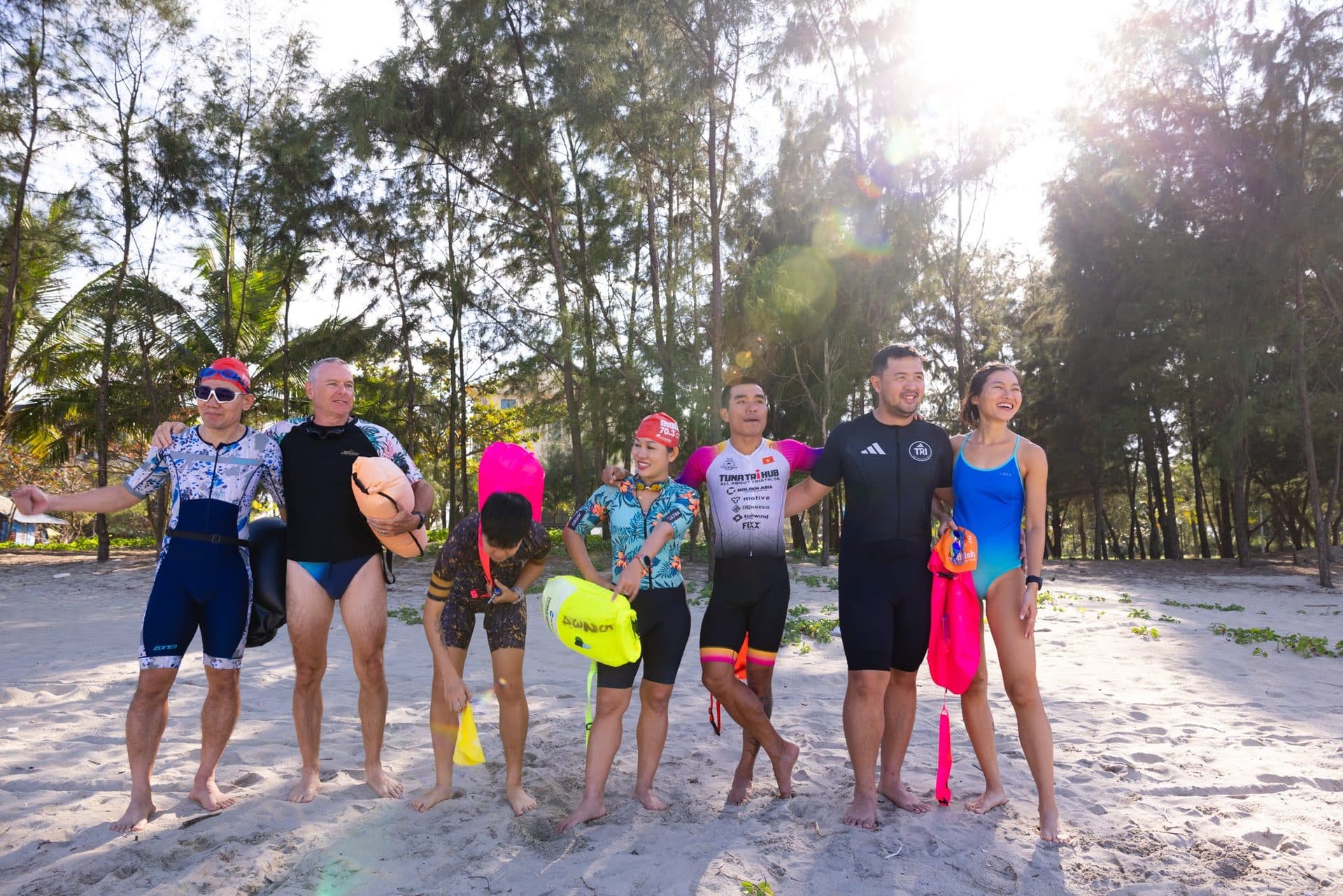
Sea Swim · Phan Thiet · April 2027
2 – 9 April 2027Phan Thiet / Mui Ne
Bay & Pass · Nha Trang · May 2027
14 – 21 May 2027Nha Trang / Cam Ranh
Quiet Roads · Quy Nhon · June 2027
18 – 25 June 2027Quy Nhon
Peak Heat · Da Nang · July 2027
16 – 23 July 2027Da Nang / Hoi An
Heat Endurance · Nha Trang · August 2027
13 – 20 August 2027Nha Trang / Cam Ranh
Highland Climbing · Da Lat · September 2027
10 – 17 September 2027Da LatKarst Country · Ninh Binh · October 2027
15 – 22 October 2027Ninh Binh / Ha Long
House of Triathlon camp · Hội An 2026